

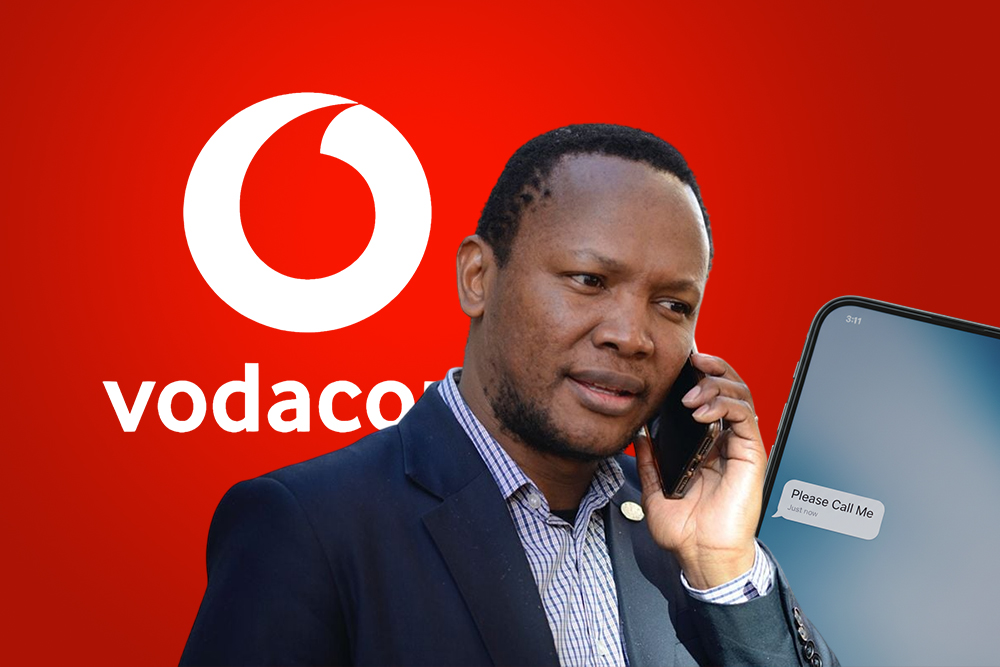
For as long as I have practiced intellectual property law, the case of Makate and Vodacom[1] has been a constant reference point. I have followed it closely and frequently cited it in my presentations to entrepreneurs across Zimbabwe. My interest in this legal dispute stems from its focus on intellectual property, especially regarding employee ownership of IP rights. It examined whether employees retain rights to the intellectual property they create while working within their roles. The case's outcome still shapes debates and decisions in the field, offering important insights for legal professionals and innovators navigating intellectual property ownership in employment contexts. The recent announcement of an out-of-court settlement[2] in the long-standing “Please Call Me” matter has prompted me to consolidate my thoughts on this landmark saga.
For nearly two decades, the name "Kenneth Makate" has been synonymous with a classic David vs. Goliath battle in South African business. His legal war with telecoms giant Vodacom was more than a personal pursuit of justice; it was a landmark case that rewrites the rules of engagement for innovators across Africa. The Constitutional Court ruling,[3] which enforced compensation and culminated in this settlement, is not just the end of a long road for Makate, it’s a new beginning for every entrepreneur, inventor, and dreamer on the continent. It’s a stark lesson in intellectual property (IP) protection that cannot be ignored.

The "Please Call Me" Story in Brief
In 2000, Kenneth Makate, a young trainee accountant at Vodacom, proposed an idea: a service that allows a user without airtime to send a free text message requesting a call back. The backstory behind this invention is a personal fascination of mine, proving that innovators are ultimately in the business of solving day-to-day problems. Makate attributed the “Please Call Me” solution to a personal communication difficulty with his then-girlfriend (now his wife), who could not afford airtime. He needed a way to ensure she could initiate a call or let him know to call her back, even when she had no airtime. The call idea he proposed was that a cell phone user with no airtime could “ buzz” or send a “ missed call” to a user with airtime and the latter could then call the former. This mechanism ,based on a lived experience of not being able to communicate due to a lack of airtime, was then developed into the “ Please Call Me” product by Vodacom.
Makate presented this idea to his manager informally, with no written contract detailing ownership or compensation. Vodacom eventually launched the product, which became a phenomenal success, generating billions in revenue. Makate, however, received nothing, leading to a legal battle that climbed all the way to South Africa's highest court.
The Legal Victory: Implied Contracts and Unjust Enrichment
While complex, the core of Makate’s victory rested on a powerful legal principle: the "implied-in-fact" contract’. The court found that even without a formal signed document, a contract could be inferred from the conduct of the parties. Makate’s submission of the idea to a person in authority, with the understanding that he would be compensated if used, and Vodacom’s subsequent adoption of that idea, created a binding agreement in the eyes of the law. The court upheld the principle of unjust enrichment ensuring that one party cannot unjustly enrich itself at the expense of another. The court decided that it would be fundamentally unfair for Vodacom to retain the massive profits from Makate's idea without compensating him.
The court affirmed that an idea can be a legally protectable asset based on an agreement (express or implied. If someone presents an idea to another party in a context where it is reasonably understood that the idea will be paid for if used, then the law will step in to prevent "unjust enrichment." This fills a major gap in protection for innovators before their idea is fully developed into a patentable or copyrightable product. This principle also acts as a safety net for innovators when other, more specific, IP laws do not directly apply. Even though the case fundamentally decided on contract law principles, it still remains a treasure trove for IP principles and some valuable lessons for entrepreneurs.
THE ENTREPRENEUR'S PLAYBOOK: LESSONS FROM THE BATTLEFIELD
For entrepreneurs, this case is a masterclass in WHAT NOT TO DO and what you MUST DO to protect your brainchild.
1. Abandon the "Formality Fallacy
The biggest mistake an innovator can make is to believe that a handshake or a verbal promise is enough. Trust is essential in business, but it is not a substitute for legal protection. Makate trusted the system and his superiors; it cost him 20 years of litigation. The lack of a paper trail allowed Vodacom to dispute the existence of an agreement for years. Proper documentation is not distrust; it is professional diligence!.
The Lesson: Assume nothing. Formalize everything.
2. Document, Document, Document
Please note, your notebook and email trail are your first line of defence!. Before sharing your idea, create a dated, detailed record of it. When you pitch, follow up with an email summarizing the discussion: "As per our conversation/meeting today (date), at (location) ,attended by… (names) I am sharing my concept for X, with the understanding that we will agree on terms for its use." SIMPLE!
This creates a crucial paper trail that can prove the origin, content, and context of your disclosure. In today’s world you can go as far as recording the meeting and indicate at the beginning of the meeting that this meeting will be recorded. This way, you are in the right step into your evidence gathering !
3. Know Your IP's Intrinsic Value
An idea on a napkin has value. Do not fall into the trap of thinking your concept is worthless until it’s a market-ready product. Its potential is its currency. Before approaching a larger company, do your homework. Understand the market size, potential revenue, and strategic value your idea brings. This empowers you to negotiate from a position of strength, not supplication. When you also understand the value of your idea, you will protect it, wouldn’t you? Do what is necessary to secure your intellectual property in that “idea” first. You don’t have two decades to defend your idea, act quickly to protect it, especially when opportunities or funders emerge. While this is easy advice from a legal perspective, it can be difficult to apply amid rapid innovation. Be alert, please!
4. The "Implied Contract" is a Real Sword and Shield
The Makate case confirms that your actions can create legal obligations. Be mindful of how you present your idea and the reasonable expectations you set. Conversely, if you are a startup receiving pitches, be scrupulously clear about your IP policies to avoid future claims. Implement simple Non-Disclosure Agreements (NDAs) before detailed discussions.
Treat your idea like the valuable commercial asset it is. You would not hand over physical property without a receipt; do not hand over intellectual property without a record!
5. Rules of Engagement: Clarity please!
While employers often own IP created by employees in the course of their duties, this case was different. Makate's idea was arguably submitted outside his normal duties. The judgment suggests that when a company solicits or accepts ideas from its employees in a way that creates a reasonable expectation of reward, it cannot later hide behind the standard employment contract to avoid payment.
The Lesson: Both companies and employee-innovators need clarity. Companies must have clear IP policies on handling employee-submitted ideas. Employees must understand these policies and, if submitting a ground-breaking idea, should seek prior written agreement on terms.
6. Grit and Perseverance Are Non-Negotiable
Legal battles are draining, in so many respects. I cannot imagine the toll on Makate’s mental health and finances as he was fighting for compensation of his intellectual sweat! If there is any life lesson to take away, it is that patience pays, and perseverance and grit are the *sine qua non* of any entrepreneur worth their salt. (My emphasis)
A CONTINENTAL WAKE-UP CALL: BUILDING AFRICA'S INNOVATION ECOSYSTEM
The reverberations of Makate v Vodacom extend far beyond South Africa's borders. I draw the following conclusions from the matter;
A Signal to Corporates:
Large companies can no longer treat unsolicited ideas as a free-to-use innovation pipeline. The judgment mandates a fair and transparent process for engaging with external innovators, fostering a more equitable ecosystem where corporations partner with, rather than exploit, grassroots creativity. Corporate counsels must ask: What do our internal IP policies and employment contracts look like? It is time to pay close attention. Innovators must also understand their terms of engagement and proceed cautiously!
A Boost for Investor Confidence:
A robust legal system that protects IP is a cornerstone of a thriving startup economy. This judgment signals to local and international investors that African courts will defend intellectual property rights, making the continent a less risky and more attractive place to invest. The legal system recognizes the inherent value of innovation. Even in the absence of a formal IP right, a court may intervene to prevent a large corporation from being unjustly enriched by exploiting an individual's creativity. Be warned!
Formalizing the Informal:
Africa has an abundance of informal innovation. This case highlights the critical need for initiatives, from government, incubators and legal clinics, that help bridge the gap, educating entrepreneurs on how to protect their ideas and integrating into the formal economy.
CONCLUSION: A LEGACY OF EMPOWERMENT
The Makate v Vodacom judgment is not merely a story of one man's perseverance. It is a foundational text for the next generation of African builders. It teaches that an idea, properly documented and asserted, can stand against the might of a corporate titan. It shifts the cultural narrative from "be grateful for the opportunity" to "know your worth."
For the African entrepreneur, the lesson is clear: Your intellect is your most valuable asset. Protect it with the rigor it deserves. The future of the continent's economic landscape depends not just on having brilliant ideas, but on creating an environment where those ideas are recognized, respected, and rewarded. Kenneth Makate’s long fight has helped secure that future for us all.
There is no reason in the world to spend a minute of your life or a dollar out of your pocket building something you don't own… Protect your IP!
For any further enquiries on intellectual property matters , do not hesitate to reach out to BMATANGA IP ATTORNEYS on: [email protected] or [email protected].
[1] Vodacom (Pty) Limited v Kenneth Nkosana Makate and Another [2025] ZACC 13
[2] Vodacom in 'Please Call Me' out-of-court settlement with ...https://www.moneyweb.co.za › companies-and-deals
[3] Vodacom (Pty) Ltd v Makate and Another (CCT 51/24) [2025] ZACC 13; 2025 (10) BCLR 1174 (CC); [2025] 11 BLLR 1105 (CC) (31 July 2025
0 Comments